
Hossain, Elizabeth, Nathan and Abbas
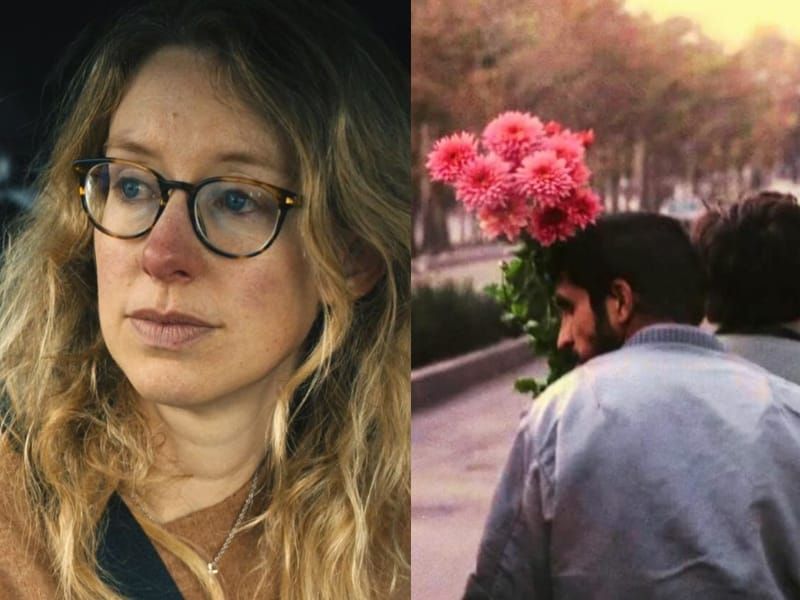
Hello! Welcome to Hydrangea, a newsletter by the writer and photographer Corbin Smith. This post is free but half of the posts on this bad boy will cost ya’ six bucks a month. This post contains spoilers for both Abbas Kiarostami’s 1990 film Close-Up (watch it here, it’s amazing) and the 2026 Nathan Fielder/Lance Oppenheim Collaborative effort “You Can See Everything” (Currently screening in movie theaters.)
From the moment the lights went down for You Can See Everything, until the end of that terrible odyssey, one movie never strayed far from my mind: Iranian director Abbas Kiarostomi’s 1990 masterpiece, Close-Up.
The similarities are so apparent they read as quotations. Fielder and Oppenheim, and their cinematographer David Bolen, shoot in a cramped 4:3 ratio and stage as much of the movie as possible in close-ups; Kiarostomi does the same. Kiarostomi tells his story with a mix of courtroom footage, reenactments, and scenes that fall somewhere in between. You Can See Everything mixes other modes of address into its stew, but most of Close-Up’s staging ideas make an appearance. They both involve tales of fraudsters reckoning with the consequences of their actions, they both futz with the sense of what is and isn’t “Real” or “True” in both the telling and the performance of the subject. In both movies, the fraudster is captivating, a window for the audience to gaze into, so they can test their own ability to see truth.
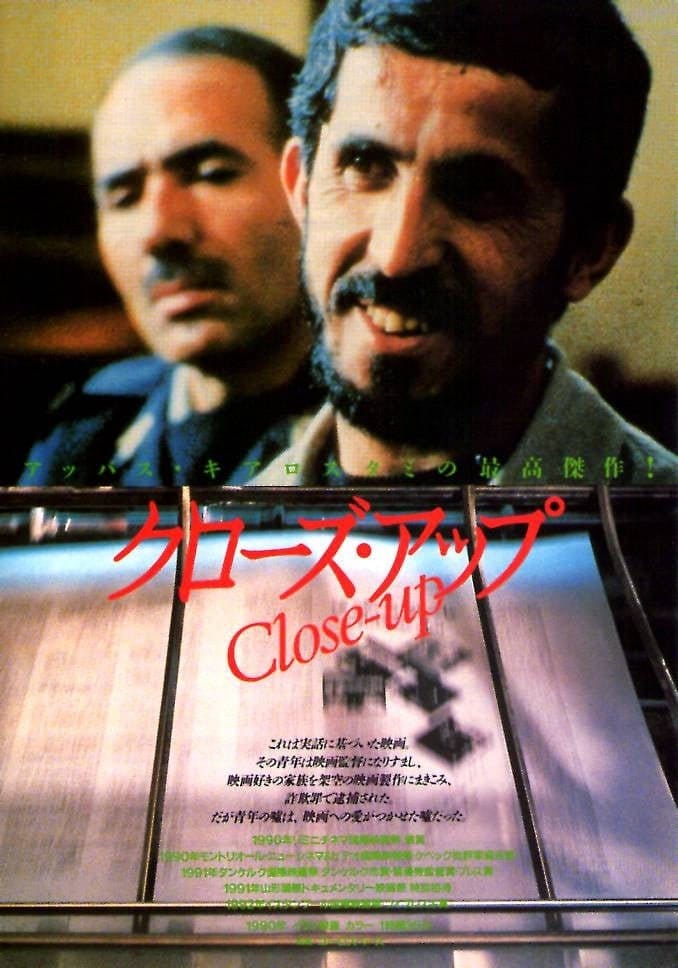
Kiarostomi put Close-Up together after reading a strange story in a newspaper. In Tehran, a print shop employee named Hossain Sabzian was arrested after the Ahankhahs, an upper-class engineering family, figured out that he was not actually Mohsen Makhmalbaf, an Iranian New Wave director known for his neorealist-tinged films regarding everyday life in contemporary Iran.
In reenactments shot by Kiarostomi, we see what happened: Sabzian, a big film fan, was reading the screenplay for The Cyclist, a recent film by Makhmalbaf, on a public bus. Mahrokh Ahankhah, the matriarch of a family of cinema buffs, strikes up a conversation with Sabazian about the movie and in a fit of pique, he declares that he actually IS Makhmalbaf and that she can have the screenplay, as a gift. They exchange information and Sabzian-as-Makhmalbaf begins coming over to their house, where he convinces the Ahankhahs that he wants to film a movie with them in their house—amateur actors are common in the neorealist tradition that Makhmalbaf and Kiarostomi operate in—until the family’s patriarch, who claims he was suspicious at first glance, engages with a magazine writer who has actually met Makhmalbaf. The writer then confirms that Sabzian is an imposter, and he is promptly hauled off to jail.
The mystery at the heart of this movie is not whether he did all this: Makhmalbaf wasn’t a highly photographed man, and visual information moved a lot slower in pre-internet Iran. It was the last time in history someone could feasibly run a con like this. The mystery is why? What did Sabzian stand to gain from all this? Did he think that he was going to take these people’s money and use it to make a movie? Was he running a casing operation, getting a tour of the house so he and some associates could rob them later?
In his trial, which Kiarostomi shoots documentary-style, a reenactment shows Sabzian giving Abbas permission under the condition that Kiarostomi tell Makhmalbaf that “The Cyclist is a part of me.” Sabzian gives the judge a fascinating explanation: he is a poor man, divorced on account of his poverty, living with his mother. His work at the print shop is inconsistent, but that art—and cinema in particular—mean the world to him, and he craved the attention that a great artist like Makhmalbaf receives. The idea that anyone would think he was his own hero was intoxicating to him, and he rode it far further than he should have.
He is contrite, seems ashamed, and most viewers come to the conclusion that he is being truthful about his lie. He only extracts hospitality and a little bit of money from the Ahankhahs—after all, in an event that he recalls for the court, he spent some small bit of money he got from this lie on a treat for his child. This was, Sabzian’s telling went, a moment in which the real man lurched forward from the mockery that he was making of Makhmalbaf. Everyone involved decides to exercise forgiveness, and Sabzian is given time served and cut loose.
The movie ends with the real Makhmalbaf meeting Sabzian. Sabzian breaks down into tears upon meeting his hero, who is, it turns out, a self-effacing and funny guy, far from the glowering tormented artist-type that Sabzian played him as. They take a motorcycle ride to the Ahankhah’s compound, give them some pink flowers they purchased at the market, and the movie ends on a still frame of Sabzian’s face, obscured by the flower, one final chance for the audience to try and read the deeper reason into his deception.
In the end, Close-Up cannot bring us to a total understanding of what happened. But it expresses deeper truths: life is very difficult, disassociation is a refuge for people in crisis, consuming and making art is a manifestation of that disassociation, and forgiveness and human connection make their own truth, one more profound than the sort that can be adjudicated in a courtroom.
But what happens when the subject isn’t contrite? What if they don’t admit wrongdoing, even in the face of prison? What if the stakes of their deception don’t amount to wasted time and a cursory amount of money, but billions of dollars of market cap annihilated overnight? In You Can See Everything, Fielder and Oppenheim try to understand Elizabeth Holmes the way that Kiarostomi comes to understand Sabzian, but they are only left with more questions; maddening questions, deeper and deeper voids that never fill.
Watching either Close-Up or You Can See Everything turns the viewer into Robert Graysmith at the end of Zodiac, walking into a hardware store to gaze at Arthur Leigh Allen, so he can try to see the murderous perversity bubbling under the surface of his frightening exterior. Graysmith convinces himself that he figures something out, and Sabzian’s weathered face and hole-ridden socks give the viewer enough to work on, but Holmes, with her annihilating blue eyes, offputting affect, and bizarre charisma, betrays nothing.
Why is she so unflustered when she is lying about having never lied before? Does the fact that her dad worked at Enron mean anything? Did it give her a tolerance for white collar crime? Did he teach her the deeper mechanics of high-level scamming? Or is it just a gigantic coincidence that two of the biggest corporate scams in American history both involve two people from the same nuclear family?
There is a person who is not in this movie: Sunny Balwani, Holmes’s business and romantic partner at the time of the Theranos scam. The particulars of their relationship are unsavory. They got together when Holmes was 19 and he was 37, and she brought him in to help run Theranos when the board decided, with good reason, that a nineteen year old college dropout wasn’t qualified to run a biotech firm on her own. Holmes has accused Balwani of sexual and emotional abuse, though she didn’t go as far as to accuse him of engineering the fraud that Theranos was built on, because she refuses to acknowledge that Theranos was fraudulent.
In Everything we see both her new partner, her fiancé Billy Evans, and Elizabeth’s parents both visibly blanch at talking about Balwani. Liz breaks down while watching a scene from The Dropout, a television mini-series starring Amanda Seyfried that tells a lightly fictionalized (but is anything ‘not fictionalized?’) version of the Theranos story. In the scene, Sunny, portrayed by as a sword-enthusiast douchebag by Lost star Naveen Andrews, is preparing her for a meeting with investors, telling her she is “beautiful,” but that she shouldn’t be “too beautiful,” while buttoning up her blouse a few steps. We are left to wonder why this was the breaking point. Was it too close? Is the idea that people view her this way traumatic? Is she simply playing another game and making herself cry, to garner sympathy?

The movie doesn't exonerate Liz in the way she says she wants it to, of course. Theranos was, at best, making shit up and hoping beyond hope that their tech could catch up to their stock-inflating promises, and was more than likely the product of a scamming mindset that went deeper than that. But it does crack open unnerving questions about how her relationship to Balwani fed into the disaster that unfolded. Why didn’t she dime out on Sunny’s corruption? Why does she insist on her own innocence, when cooperating with prosecutors could have saved her from the nightmare of the American prison system? In seeing her relationship with Billy, in hearing her talk about monuments to love for this amoral-husk-seeming-dude, we are left to wonder if she is also a victim in all this. Is this King Lear, a tragedy about someone dragged into the mud by the people they love? Or is it Macbeth, a story about a manipulator who outsources her dirty work to the men in her life?
Everyone comes to their own conclusions, and many post about them on the internet. Some of these posts have the black-and-white quality of good person/bad person analysis, the vice of social media thinking. I embrace ambivalence: of course she knows she lied and is still lying, but she also probably did believe in a kind of minor version of the product that got away from her in trying to sell the stock. Yes, she probably expects her partner to do dirty work on her behalf, but she is also prone to being controlled by her partner's dynamic, a born codependent. But I don’t know any of this and I took no comfort in any of these thoughts. Fielder is generous with his subject the way Kiarostomi was, prying for answers beyond Holmes’ real or fake tears, trying to see the person at work here—but she projects a long black monolith, a void from which knowledge doesn't escape.
Holmes’s deep blue eyes and hypnotic affect might not betray any hard truths about Elizabeth Holmes, but the process of seeing this strange person amble about— while knowing that less than a decade previous she was a shark, a skilled salesman who roped half of the investment funds in Silicon Valley, a former secretary of defense, and Henry Kissinger into her scheme—aren't we seeing something true about the economy where she thrived?
Even if she is now in exile, Holmes was at one point a member of this class, a master of the switches and levers that confer power and influence in capitalism. The movie itself gestures towards Elon Musk, a capitalist who is in good standing with the law (for now) but who exhibits the exact same kind of overpromising and underdelivering that eventually left Liz two hundred million dollars in debt and tied to a coked-out dickhead for survival.
We don't know how Holmes really thinks of herself, if she really believes in her device, or if it’s all a mix of truth and untruth kicking around in there. But we do know that this particular combination of monomaniacal focus and willingness to really dive in and connect with the person who is sitting in front of her gave her a magical command over the market for a period of time, even when the particulars of her mind, moment to moment, are completely baffling.
Kiarostomi was living and working in post-revolutionary Iran, a place where he could still make movies about contemporary rural peasantry. The economic expectations in this society are not that high, and the crime we see depicted is a common scam, the sort that has been happening since a thing we could call "Human Society" has existed. The conclusion he comes to is universal, like a fable. But when we see the same technique applied to a high financial criminal operating in the American imperial core, the void of the unknown devours everything. Kiarostomi, reading Iran, sees a world where you can’t know everything, record everything, understand everything, but you can see that we’re all people. You Can See Everything, reading the morass of 21st century America, isn’t so sure. It’s possible we’re seeing people who have become something else entirely; colors out of space, unseeable by any camera.